
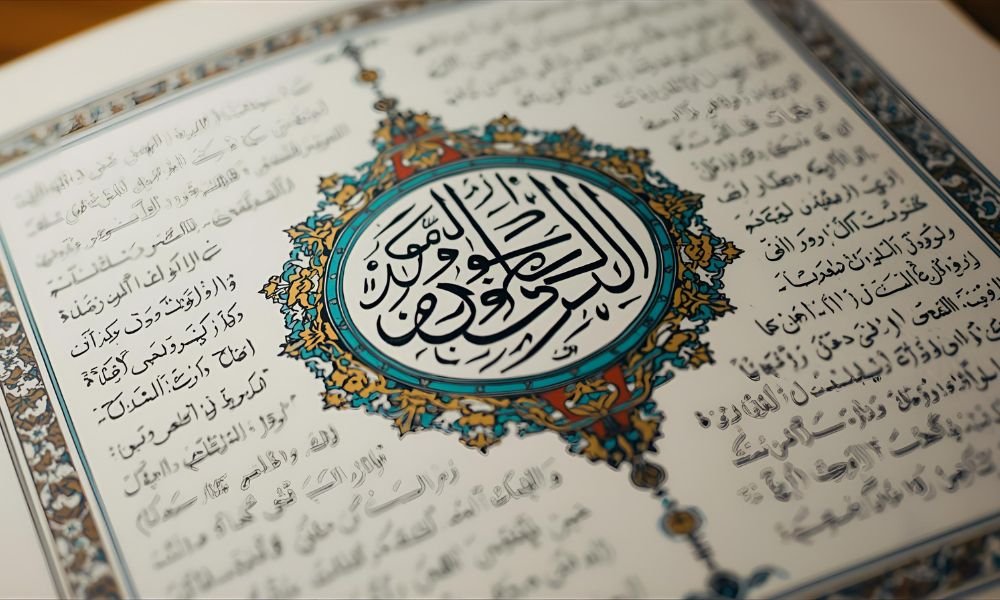
The holy Quran, the divine manual for living, is at the centre of every Muslim’s path. However, learning the Tajweed Quran is an essential first step for anybody aiming to recite the Quran in its most authentic form. In order to ensure that the Quran is read as it was revealed more than 1,400 years ago, a series of regulations known as Tajweed governs how Arabic letters should be spoken, how sounds should be articulated, and how certain vowels should be elongated. Learning Tajweed is a fulfilling experience that enables the reciter to become closer to the sacred text in a significant and meaningful manner, even if it may first appear like a complicated idea.
Reading the Quran properly is just one aspect of the Tajweed Quran’s art; another is capturing the essence of the text’s meanings and rhythms and allowing them flow organically. Every Muslim may recite the Quran with elegance, accuracy, and devotion thanks to this age-old science, which also maintains the text’s purity and holiness. Tajweed Quran is a journey that gives spiritual, mental, and emotional enrichment, regardless of your level of experience.
What is the Tajweed Quran?
The Quranic text read in accordance with the particular phonetic and pronunciation guidelines known as Tajweed is referred to as the Tajweed Quran. The Arabic root “j-w-d,” which means to improve or beautify, is where the name “Tajweed” itself originates.
These guidelines guarantee that every verse is read with the highest regard for its original form since every Arabic letter has a unique sound and position of articulation. Learning Tajweed entails being proficient in these complex rules and sounds, paying close attention to little details like how to pronounce each letter correctly, lengthen vowels, and articulate nasal sounds.
The Importance of Tajweed in Quranic Recitation
Understanding the beauty and complexity of the Quran is the goal of studying the Tajweed Quran, which goes beyond just learning to read. In Islam, accurately reciting the Quran is very important. The precise pronunciation of the Quran, which was revealed in Arabic, has profound connotations that may be altered by minute variations in sound. The reciter guarantees the integrity and correctness of these meanings by following Tajweed’s guidelines.
Additionally, Tajweed Quran improves the recitation’s aesthetic experience. The words of the Quran, when correctly recited, inspire feelings of calm, serenity, and intimacy with Allah. Because of this, practicing Tajweed is both an intellectual and a profoundly spiritual endeavour.
Why Learning Tajweed is Essential for Every Muslim
Learning the Tajweed Quran is a crucial component of a Muslim’s Quranic journey. It maintains the integrity of the Quranic words as they were revealed by guaranteeing that each verse is repeated with accuracy and respect. Without Tajweed, the words’ true meaning might change, causing the holy book to be misunderstood or misrepresented.
It urges the reciter to take their time, concentrate, and carefully absorb each syllable. A deeper connection with the text is made possible by this thoughtful recitation method, which is sometimes overlooked in hastier, careless readings. The meanings of the Quran become more apparent when recited with Tajweed, and the spiritual advantages increase.
The Basics of Tajweed
Tajweed is an intricate science, but its fundamentals can be understood with practice. The core principles of Tajweed Quran can be summarized in a few key rules that every student should master.
- Makharij (Articulation Points): The first step in learning Tajweed is to understand the articulation points of each Arabic letter. Arabic letters are produced from specific parts of the mouth and throat, and knowing where each letter originates is crucial for accurate pronunciation.
- Sifaat (Characteristics of Letters): Each letter in the Arabic alphabet has particular characteristics that influence how it is pronounced. These include whether a letter is heavy or light, sharp or soft.
- Madd (Elongation of Vowels): One of the fundamental aspects of Tajweed is knowing when and how to elongate vowels in the Quran. Madd ensures that the reciter stretches certain vowels at specific points in the text, giving the recitation a flowing, musical quality.
- Ghunna (Nasal Sounds): The nasal sounds in Tajweed give the recitation a distinctive tone. These are important in creating a harmonious balance in the Quranic verses, particularly in longer phrases or words.
Common Challenges in Learning Tajweed
Learning Tajweed Quran has various difficulties, even though it may be a life-changing event. Because Arabic phonetics vary greatly from those of many other languages, pupils may find it difficult to correctly pronounce certain sounds. For instance, many non-Arabic languages lack exact counterparts for letters like “ص” (Sad) and “ض” (Dhad), which makes them more difficult to say.
Consistency is another problem. Internalising the laws of Tajweed may be difficult without regular practice, particularly for more complex methods like Idgham (merging sounds) and Qalqalah (the bouncing sound).
Finally, memorising and applying all of the Tajweed rules at once is a challenge for many students. Tajweed requires both theoretical understanding and real-world application, thus it’s essential to practise often and get input from knowledgeable teachers in order to become better.
How to Start Learning the Tajweed Quran
Enrolling in an online or in-person organised course is the ideal way to begin studying the Tajweed Quran if you have never done it before. Numerous Quranic centres and internet resources provide introductory Tajweed classes that walk you through the essential guidelines step-by-step. Before advancing to the more complex elements of Tajweed, beginners need first become proficient with the Arabic alphabet and articulation points.
Many videos, apps, and internet resources are accessible for self-study, allowing you to learn at your own speed. Training your ear to pick up on the subtleties of correct pronunciation may also be greatly aided by listening to knowledgeable reciters and imams.
The Spiritual Benefits of Learning the Tajweed Quran
There are several spiritual benefits of incorporating the Tajweed Quran into your everyday routine. In addition to ensuring that the Quran is read correctly, using appropriate Tajweed while reciting it improves your connection with God. Tajweed enables you to thoroughly comprehend the meanings of the verses by increasing your level of concentration and mindfulness during recitation.
Additionally, studying and performing Tajweed is a devotional act in and of itself. Reciting the Quran turns into a meditative exercise that strengthens your connection to Allah and increases your awareness of the present. Reciting the Quran with Tajweed, according to many, may also boost one’s benefits by promoting spiritual elevation, calm, and tranquilly.
Advanced Tajweed Techniques
As you progress in your understanding of the Tajweed Quran, you will encounter more advanced techniques. For instance, the different methods of stopping and starting between verses, known as Sakt and Wasl, are crucial for fluent recitation. The proper use of Iqlab, which changes the sound of certain letters depending on the context, is another advanced Tajweed rule that enhances recitation.
Conclusion: The Importance of Mastering Tajweed
Mastering the Tajweed Quran is more than just a technical skill—it is an enriching journey that enhances your spiritual connection with the Quran. It allows you to experience the beauty of the divine words in their purest form. Whether you’re just starting or you’re seeking to refine your skills, learning Tajweed is an essential part of the Quranic journey that helps preserve the Quran’s original form and deepen your relationship with Allah.
Tajweed is not only about precision in the pronunciation of the Quran; it’s about perfecting your recitation to the point where every verse of the Quran resonates with meaning and beauty. For every Muslim, it is a lifelong pursuit that brings immeasurable rewards, both in this life and the hereafter.