
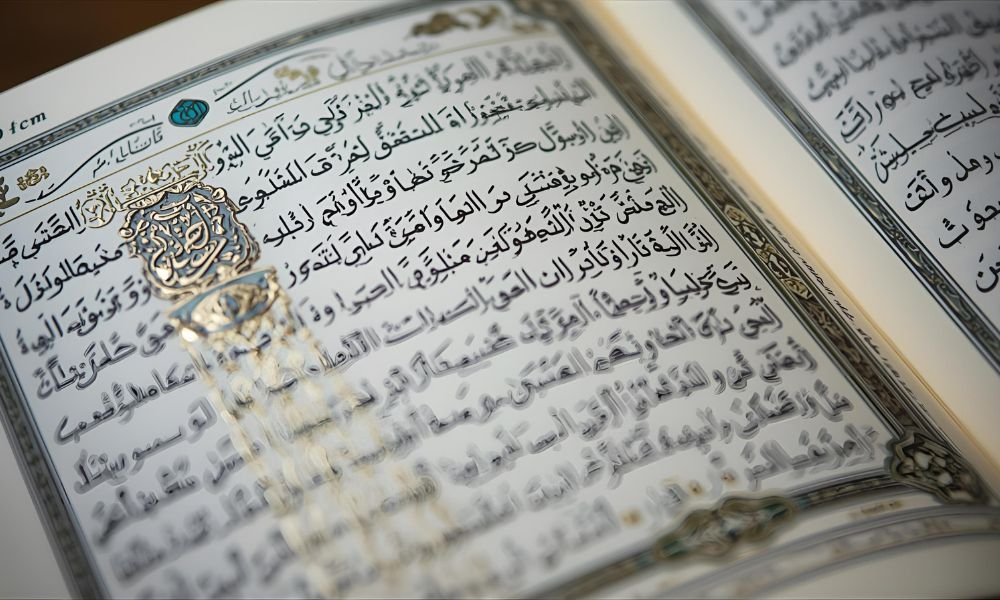
Every Muslim’s life is greatly impacted by how the Quran is spoken. Maintaining the purity, correctness, and profound significance that are ingrained in every verse is more important than just repeating words. Tajweed, or correctly pronouncing the Quran, guarantees that the verses are spoken just as the Prophet Muhammad (PBUH) received them.
The complexities of pronouncing the Quran might be daunting to many, particularly novices. Nevertheless, these difficulties might be addressed by being aware of its importance and the formal guidelines that control its recitation. Students may make sure their recitations reflect the sanctity of the Quranic message by paying close attention to the specifics of each Arabic letter, sound, and the articulation points that go along with it.
The purpose of this book is to assist readers—particularly those who are unfamiliar with the study Of Quran pronunciation—in navigating the nuances involved and building A solid foundation in this crucial ability. It is a spiritual journey that links the reciter to the divine in addition to being an intellectual endeavour.
The Importance of Correct Quran Pronunciation
Pronouncing the Quran correctly is a serious issue. In the Arabic language, every letter has a unique sound and set of properties. Depending on how they are spoken, these letters might have several meanings. For example, while they may seem fairly similar to the untrained ear, the letters خ (Khaa) and س (Seen) have rather distinct sounds. Even little mispronunciations may cause spiritual teachings to be misunderstood and drastically change the intended meaning.
The reciter is guided by Tajweed guidelines on the proper pronunciation of each letter, when to stop, how to manage breath, and when to extend the sound. When adhered to, these guidelines guarantee that Allah’s words are recited with the highest respect and sincerity.
Furthermore, reciting the Quran with proper pronunciation improves the spiritual experience. The words have a melodic sound when said properly, and the reciter has a stronger sense of spiritual connection. Each verse’s clarity encourages introspection and thought, transforming the recitation into a profoundly contemplative activity rather than just an oral tradition.
The Role of Tajweed in Quranic Recitation
Tajweed is the technique of accurately reciting the Quran, making sure that every word and sound is spoken in accordance with the guidelines established by Quranic scholars. These guidelines include how to emphasise certain consonants, extend vowels, and pause at particular times. Tajweed also teaches Makharij, the ability to pronounce each letter with its right articulation point.
It is impossible to overestimate Tajweed’s significance. It distinguishes a recitation that really respects the meaning of the Quran from one that is only superficial. The reciter maintains the phonetic integrity and intended meaning of the Quran by following Tajweed standards, which guarantee that the text is spoken as it was revealed.
Nonetheless, it becomes a vital tool for anybody hoping to fully comprehend and appreciate the depths of the Quran with constant practice and direction.
The Science Behind Quran Pronunciation
The study of phonetics and articulation provides the foundation for how the Quran should be spoken. Pronouncing Arabic, the language of the Quran, is both intriguing and difficult since it has distinctive sounds that may not be found in other languages. Makharij is the name for the particular location in the mouth, throat, and nasal passages where each sound is articulated.
Mastering the pronunciation of the Quran requires knowing where and how to make these sounds. Understanding how the lips and tongue work together to create the ideal sound enhances the recitation’s depth and clarity and goes beyond just repeating words.
The use of the vowel markings that go with the letters is another important part of Quranic pronunciation. These symbols, referred to as Harakat, influence the meaning and flow of each verse by offering instructions on how to pronounce vowels and consonants.
Common Mistakes in Quran Pronunciation and How to Avoid Them
Pronouncing the Quran correctly may be difficult, even for native Arabic speakers. It might be considerably more challenging for non-Arabic speakers. Similar sounds, like ص (Saad) and س (Seen) or ط (Taa) and ت (Tee), are often confused. Despite their superficial similarity, these letters are pronounced differently from various mouth positions.
Misusing the Tajweed rules, such as not elongating certain vowels, is another frequent mistake that may alter a verse’s meaning. For example, the term الرحمن (Ar-Rahman) has to be slightly stretched; else, its meaning might be drastically changed.
Beginners should practice often, seek advice from experts who specialise in Quranic pronunciation, and pay close attention to experienced reciters in order to prevent these errors. It may also be quite beneficial to regularly evaluate oneself utilising recordings of their recitations.
The Role of Tajweed in Enhancing Quran Pronunciation
Learning Tajweed improves pronunciation while also highlighting the verses’ rhythm and flow in the Quran. The sounds of the Quran blend into a beautiful symphony when recited with appropriate Tajweed, giving the reciter a deeper, more profound understanding of the text.
Reciters may also prevent mispronouncing terms that might change their meaning by following Tajweed principles. Tajweed guarantees that every word is spoken just as meant, whether it be a commandment or the name of Allah. This appreciation for the Quran’s verses fosters a sense of reverence and attentiveness throughout recitation, strengthening the spiritual bond.
Mastering Arabic Sounds for Accurate Quran Pronunciation
Certain sounds that are absent from other languages must be mastered in order to pronounce Arabic correctly. Making these strange noises is often difficult for novices. For example, a student may first find it challenging to generate the throat-produced sound of غ (Ghayn). The tongue and throat must be carefully coordinated to produce the sound of خ (Khaa).
It’s crucial to practise listening to native speakers and repeating the sounds slowly and carefully in order to become proficient with them. A lot of Quranic applications and resources include features that enable students hear how each letter is pronounced over and over again, which helps them develop muscle memory and gradually increase accuracy.
Step-by-Step Guide to Improving Quran Pronunciation
Pronunciation of the Quran may be improved gradually with commitment and regular practice. Learning the Arabic alphabet by heart, paying close attention to how each letter is pronounced, is the first stage. After becoming acquainted with the letters, the student should start practicing their pronunciation by mimicking the rhythms and tones of experienced reciters on recordings.
Dividing the verses into manageable chunks is another crucial exercise. The student may concentrate on mastering their pronunciation of each word before going on to the next by concentrating on short portions of the Quran.
Lastly, it might be quite helpful to practise recitation with other people or with an instructor. Receiving feedback from others may assist in pinpointing areas that need development, and learning is often made more engaging and participatory via group practice.
Conclusion
A key component of learning to recite the Quran is mastering its pronunciation. Preserving the original voice and meaning of the divine message is more important than just reading words. Anyone may become better at reciting the Quran by learning Tajweed, comprehending the science of Arabic pronunciation, and practicing often.
The pursuit of flawless pronunciation is a continuous process. It calls for perseverance, commitment, and an openness to learning. But the benefits are enormous. Recitors may improve their spiritual experience, strengthen their bond with the Quran, and get a deeper comprehension of its teachings by pronouncing it correctly.