
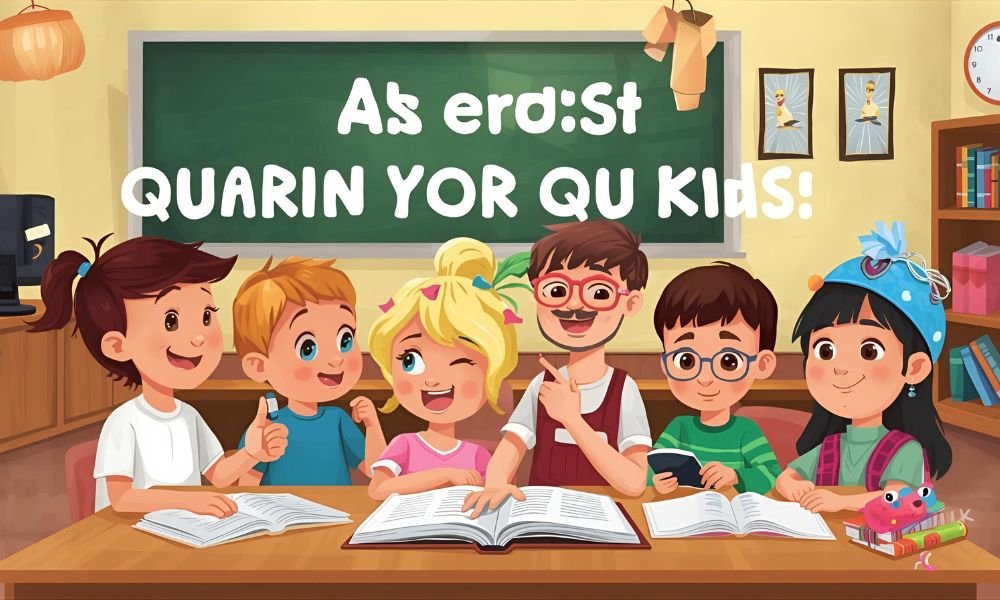
Children’s Quran sessions provide more than simply education. They serve As A springboard for intellectual, spiritual, And cultural development. Early exposure to the Quran enhances children’s reading and memory abilities while also assisting them in developing A solid religious basis. Children may form A strong bond with the Quran with the correct direction and instruction, laying the groundwork for a lifetime of spiritual growth.
The Importance of Learning Quran at a Young Age
Early exposure to Quranic instruction has incalculable advantages. Early exposure to the Quran not only exposes kids To the core ideas of Islam, But it also helps them develop the discipline Of consistent study. Learning the Quran improves cognitive abilities including memorisation, attention, and understanding during a time when the brain is most responsive. Children who are exposed to these lessons also grow up with strong moral principles and A feeling of belonging, which promotes empathy And respect for other people.
Understanding Tajweed for Young Learners
An essential component of reciting the Quran is adhering to Tajweed, the set of rules that regulate how Arabic letters should be spoken. Learning Tajweed is crucial for young students since it guarantees proper word articulation. Children can understand these complex laws while staying engaged if entertaining activities like games and visual aids are included. Early Tajweed instruction helps kids not only correctly recite the Quran but also avoid frequent pronunciation errors that might change a verse’s meaning.
Benefits of Quran Classes for Kids
There are many advantages to teaching children the Quran. In addition to teaching religious texts, they aid in the development of life skills including memory, patience, and focus. Reciting the Quran on a daily basis exposes kids to new language and grammatical rules, which also helps them read more fluently. Additionally, studying the Quran fosters a feeling of devotion and accountability. Children learn more about the teachings of the Quran and apply them to their everyday lives as they advance in their education.
Who Should Enroll in Quran Classes for Kids
Children of all ages may benefit from Quran courses, which start as early as age three or four. Children may benefit from basic Quranic education at this age since they are quite capable of absorbing knowledge. Lessons may get more difficult as students become older, progressing from basic verse memorisation to more in-depth studies encompassing Tajweed, understanding, and interpretation. The foundation for their intellectual and spiritual growth is laid during the early years of Quran instruction.
Different Learning Approaches for Children
Since kids learn differently, it’s critical to employ a range of instructional strategies to maintain their interest. Flashcards, charts, and colour-coded notes may be helpful for visual learners, while Quranic recitations can be an excellent tool for auditory learners. Conversely, kinaesthetic learners do best in engaging settings where they may interact with the content via movement. A well-rounded strategy that takes into account different learning styles can increase the effectiveness and enjoyment of Quran sessions for kids.
Online vs. In-Person Quran Classes for Kids
Parents may now select between online and in-person Quran sessions because to the growth of internet education. Children may study from home thanks to the ease and flexibility of online Quran class programs. Features like video courses, tests, and one-on-one tutoring sessions are often seen in interactive platforms. Conversely, face-to-face instruction offers kids a controlled classroom setting and direct social engagement. Each approach has distinct benefits, and combining the two may be quite advantageous.
Choosing the Right Quran Teacher for Kids
Choosing a Quran instructor for children is an important choice. A competent instructor should be kind and patient in addition to having a solid comprehension of the Quran. Teachers that provide a good, stimulating, and encouraging learning environment get the greatest results from their students. A teacher should utilise straightforward language and innovative instructional strategies to hold students’ interest. In order to guarantee that children learn to accurately recite the Quran from the beginning, the instructor must also be knowledgeable with the subtleties of Tajweed.
Creating a Positive Learning Environment at Home
A child’s education of the Quran is greatly influenced by their family environment. Focus and concentration need a study area that is peaceful and devoid of distractions. By establishing a pattern that includes many study sessions, parents may help their children learn by letting them interact with the content at their own speed. A closer bond with the holy book may also be sparked by putting Quranic passages around the home or using décor with Quranic themes.
Interactive Learning Tools for Kids
Learning the Quran may be more interesting with the use of interactive technologies like games, apps, and internet resources. With interactive lectures, cartoon films, and quizzes, several educational platforms are made especially for kids. These resources provide kids a creative and entertaining approach to review the content while also letting them monitor their development. Children are inspired to continue their education by the feeling of accomplishment that interactive learning provides.
Structuring Quran Classes for Kids
Classes on the Quran should be designed to keep kids’ attention and excitement. Long, tiresome lessons are less successful than short, frequent sessions. For smaller children, a 30- to 1-hour session is usually optimal. With lots of pauses in between, these sessions may be broken up into other sections, such as reading, comprehension, and memorisation. Lessons that are structured and include a variety of activities keep kids interested and help them learn the material more efficiently.
Incorporating Memorization (Hifz) in Early Learning
Hifz, or memorisation, is a crucial part of teaching the Quran. Early memorisation instruction fosters a deep bond between kids and the Quran. Children may easily memorise verses when they use strategies like rhythm, repetition, and story-based memorisation. As kids become older, they may start learning longer Surahs by heart while honing their Tajweed. Children will love the process and stay motivated if memorisation is included in an entertaining and captivating manner.
Combining Reading and Understanding
Children must comprehend the meaning of the Quran in addition to memorising it. Classes on the Quran should emphasise the meanings of the verses as well as their pronunciation and memorisation. Simple narratives and explanations may be used by educators and parents to help kids relate to the lessons found in the Quran. A child’s moral and spiritual growth is strengthened when they comprehend the ideals and lessons included in the verses.
Common Challenges in Kids’ Quran Learning
Every youngster has difficulties when learning the Quran. Some people could have trouble remembering things, while others might find it hard to understand Tajweed’s rules. It is crucial to tackle these difficulties with tolerance and understanding. Instead of criticising, parents and teachers should give constructive feedback, support, and encouragement. Children may overcome challenges and maintain their motivation to study the Quran by being raised in a supportive and encouraging atmosphere.
Practical Tips to Motivate Kids
Sustaining children’s long-term enthusiasm in studying the Quran requires keeping them motivated. Positive reinforcement, incentives, and praise may all be quite effective in promoting advancement. A feeling of accomplishment is fostered by acknowledging and applauding little accomplishments, such as memorising a lyric or perfecting a Tajweed rule. Children may be inspired and given a sense of purpose in their educational journeys by their parents via the use of Quranic tales and role models.
Parental Involvement in Quran Learning
Parents play an integral role in their child’s Quranic education. Providing consistent support and encouragement is key to a child’s success. Parents can actively participate by listening to their child’s recitation, helping with memorization, and discussing the meaning of verses. Active involvement strengthens the parent-child relationship and allows parents to foster a deeper understanding of the Quran within the home.
Assessing Progress in Quran Classes for Kids
Regular assessments are an important part of tracking a child’s progress in Quran education. Teachers can use simple quizzes, oral recitations, and written tests to evaluate comprehension and memorization. Tracking progress provides both children and parents with a sense of accomplishment and highlights areas for further improvement. Assessments should be positive and constructive, offering encouragement and guidance.
Cultural and Language Considerations
For children who do not speak Arabic as their first language, learning to recite the Quran can be challenging. In such cases, teachers should use additional resources such as phonetic guides, visual aids, and translations to help children understand the pronunciation and meaning. This ensures that children from diverse backgrounds can learn the Quran with Tajweed, even if they are not native Arabic speakers.
Balancing Quran Learning with School and Play
While Quran education is essential, it is important for children to maintain a balance between their studies and recreational activities. Quran classes should not overwhelm the child but instead should complement their regular school work. Maintaining a balance between learning, play, and rest ensures that children remain enthusiastic and healthy, both physically and mentally.
Success Stories and Testimonials
The success of many children who have completed their Quran education with dedication is a testament to the power of consistency and hard work. Success stories highlight the personal growth and development that come from Quran studies, inspiring other children and their parents to embark on a similar journey.
Tips for Long-Term Consistency
Maintaining consistency in Quran classes for kids is vital for long-term success. Establishing a routine, setting clear goals, and gradually increasing the difficulty level of lessons help maintain momentum. Parents and teachers should work together to ensure the child remains engaged and excited about their Quranic studies, ensuring that their journey continues for years to come.
Conclusion: Maximizing the Benefits of Quran Classes for Kids
Quran classes for kids provide a pathway to spiritual growth, intellectual development, and a strong moral foundation. With the right approach, children can learn to recite the Quran beautifully, internalize its teachings, and apply them to their lives. By combining fun, structure, and consistency, both parents and teachers can help children develop a lifelong connection with the Quran, ensuring that it becomes a guiding light in their hearts and minds.